
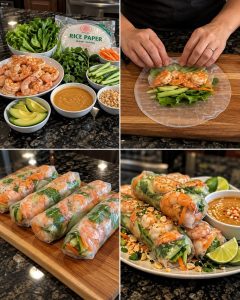
Shrimp Rice Paper Rolls – Fresh, Healthy, and Easy to Make
These Shrimp Rice Paper Rolls are fresh, colorful, crunchy, and packed with delicious flavor! 🍤🥬 Juicy cooked shrimp, crisp cucumber, sweet carrots, creamy avocado, fresh herbs, and crunchy peanuts are wrapped in delicate rice paper to create a light and satisfying meal that’s perfect for lunch, dinner, or a healthy appetizer.
Served with a creamy peanut dipping sauce, these Vietnamese-inspired fresh spring rolls are full of contrasting textures and refreshing flavors. Every bite combines tender shrimp, crisp vegetables, fragrant herbs, and a rich, savory dip that makes these rolls completely irresistible.
The best part? There’s no frying and no complicated cooking required. With cooked shrimp and a few fresh ingredients, you can prepare these beautiful rolls in about 30 minutes.
Whether you’re meal-prepping lunch, entertaining guests, or looking for a lighter alternative to fried appetizers, these easy Shrimp Rice Paper Rolls are a delicious choice!
Why You’ll Love These Shrimp Rice Paper Rolls
- Fresh and colorful: Vibrant vegetables, pink shrimp, and green herbs make every roll beautiful.
- Light but satisfying: Shrimp provides protein, while avocado and peanuts add richness.
- No frying required: These fresh rolls are assembled rather than deep-fried.
- Easy to customize: Add rice noodles, mango, bell peppers, or your favorite herbs.
- Perfect for entertaining: Slice the rolls in half to create an attractive appetizer platter.
- Great with dipping sauce: Creamy peanut sauce adds a savory, nutty finish.
- Naturally gluten-free when ingredients are verified: Rice paper is generally gluten-free, but check all packaged sauces and ingredients.
Recipe Information
- Prep Time: 25 minutes
- Cook Time: 0 minutes, using fully cooked shrimp
- Total Time: Approximately 25–30 minutes
- Servings: 4
- Yield: 8 rice paper rolls
- Course: Appetizer, lunch, or light dinner
- Cuisine: Vietnamese-inspired
- Difficulty: Easy
- Method: No-cook assembly
Ingredients for Shrimp Rice Paper Rolls
For the Fresh Rolls
- 1 lb cooked shrimp, peeled and halved: Use small or medium shrimp, or slice larger shrimp lengthwise. Pat them dry before assembling to prevent excess moisture.
- 8 rice paper wrappers: These soften in warm water and become flexible enough to roll.
- 1 carrot, julienned: Adds sweetness, crunch, and vibrant color.
- 1 cucumber, julienned: Provides a cool, refreshing crunch. Remove watery seeds if your cucumber is particularly juicy.
- 1 avocado, sliced: Adds creamy texture and balances the crisp vegetables.
- Lettuce: Use tender lettuce leaves, such as butter lettuce or green leaf lettuce.
- Fresh cilantro or mint: These herbs add the fresh, fragrant flavor that makes rice paper rolls so delicious.
- ¼ cup crushed peanuts: Sprinkle these into the rolls or serve them on the side for extra crunch.
- Peanut dipping sauce: A creamy, savory sauce ties all the flavors together.
Optional Ingredients
These additions are optional and can be used to customize the rolls:
- Rice vermicelli noodles for a heartier filling.
- Red bell pepper strips for sweetness and color.
- Thinly sliced red cabbage for extra crunch.
- Fresh Thai basil for a fragrant herbal note.
- Mango strips for a sweet, tropical twist.
- Lime wedges for serving.
- Sesame seeds for additional texture.
Easy Peanut Dipping Sauce
If you’re using store-bought peanut dipping sauce, simply place it in a small serving bowl. For a quick homemade version, mix the following ingredients together:
- ¼ cup creamy peanut butter
- 1 tablespoon soy sauce or tamari
- 1 tablespoon lime juice
- 1–2 teaspoons honey or maple syrup
- 1 small garlic clove, finely grated
- 2–4 tablespoons warm water, as needed
- A little sriracha, optional
Whisk everything together until smooth, adding warm water gradually until the sauce reaches your preferred consistency.
Taste and adjust the lime juice, sweetness, or spice to suit your preference. If you use salted peanut butter or soy sauce, taste before adding any extra salt.
For a thinner dipping sauce, add a little more water. For a richer sauce, add another small spoonful of peanut butter.
How to Make Shrimp Rice Paper Rolls
Step 1: Prepare the Ingredients
Wash and dry the lettuce and fresh herbs. Cut the carrot and cucumber into thin matchsticks, slice the avocado, and prepare the shrimp.
If using large shrimp, cut them lengthwise so they’re easier to arrange inside the rolls. Pat the shrimp dry with paper towels.
Keep the filling ingredients arranged in separate bowls or on a cutting board. Having everything ready makes assembling the rolls much easier.
If you’re preparing the peanut sauce from scratch, mix it now and set it aside.
Step 2: Soften the Rice Paper
Fill a shallow dish or large plate with warm water.
Dip one rice paper wrapper into the water for approximately 10–15 seconds, or until it begins to soften but still has a little firmness.
Remove the wrapper and place it flat on a clean, slightly damp cutting board or smooth work surface.
Don’t leave the wrapper soaking for too long. Rice paper continues to soften after you remove it from the water, and an overly soft wrapper can tear or become sticky and difficult to handle.
Step 3: Arrange the Filling
Place a small lettuce leaf near the lower-middle portion of the rice paper wrapper.
Add a few cucumber and carrot matchsticks, a slice or two of avocado, and some fresh cilantro or mint.
Arrange a portion of the shrimp over the vegetables. Keep the filling compact rather than piling it too high.
For an attractive presentation, place a few shrimp pieces closer to the side that will become the top of the finished roll. Their pink color will show through the translucent rice paper.
Sprinkle with a small amount of crushed peanuts if desired.
Avoid overfilling the wrapper, especially when you’re learning how to roll rice paper.
Step 4: Fold and Roll
Fold the left and right sides of the rice paper inward over the filling.
Next, lift the bottom edge over the filling and roll upward, keeping the ingredients tucked in as you go.
Roll firmly enough to hold everything together, but don’t pull so tightly that the rice paper tears.
The wrapper will become stickier as it softens, helping the roll seal naturally.
Place the finished roll seam-side down on a clean plate.
Step 5: Repeat with the Remaining Ingredients
Repeat the process with the remaining seven rice paper wrappers.
If the wrappers begin sticking to your hands or work surface, slightly dampen your fingers or board. Avoid letting finished rolls touch one another too closely, as the rice paper can stick together.
Keep the rolls covered with a clean, lightly damp towel while you finish assembling the batch.
Step 6: Prepare for Serving
Arrange the rolls on a serving platter, leaving a little space between them.
Slice each roll in half with a sharp, slightly damp knife if desired. Wiping the blade between cuts can help keep the edges neat.
Serve immediately with the peanut dipping sauce on the side.
Enjoy the combination of juicy shrimp, crunchy vegetables, fresh herbs, creamy avocado, and rich peanut sauce!
Tips for Perfect Rice Paper Rolls
- Don’t over-soak the wrappers. They continue softening after they leave the water.
- Dry the shrimp well. Excess moisture can make the rolls slippery and difficult to seal.
- Cut vegetables into thin strips. Thin, even pieces are easier to roll than chunky vegetables.
- Keep the filling modest. Overfilled rolls are more likely to tear.
- Use a smooth work surface. A clean, slightly damp board helps prevent sticking.
- Roll gently but firmly. You want a compact roll without stretching the wrapper too aggressively.
- Keep finished rolls separated. Rice paper can stick to itself and to neighboring rolls.
- Prepare the dipping sauce first. This makes serving quick and easy once the rolls are assembled.
Delicious Variations and Substitutions
1. Shrimp and Rice Noodle Rolls
Add a small amount of cooked, cooled rice vermicelli to each wrapper. The noodles make the rolls more filling and add a soft, delicate texture.
2. Spicy Shrimp Rice Paper Rolls
Toss the cooked shrimp with a little sriracha or chili-garlic sauce before assembling. Serve with spicy peanut sauce for an extra kick.
3. Mango Shrimp Rolls
Add thin strips of ripe but firm mango. Its sweetness pairs beautifully with shrimp, cucumber, herbs, and lime.
4. Avocado-Free Rolls
If you don’t have avocado, use extra cucumber, thin bell pepper strips, or a small amount of cooked rice noodles.
5. Extra-Crunchy Vegetable Rolls
Add shredded red cabbage, bean sprouts, or thinly sliced bell peppers for more crunch and color.
6. Herb-Lover’s Rolls
Use a mixture of mint, cilantro, and Thai basil. Each herb contributes a different aroma and creates a fresh, restaurant-style flavor.
7. Sesame Shrimp Rolls
Sprinkle a small amount of toasted sesame seeds over the filling and use a sesame-soy dipping sauce instead of peanut sauce.
8. Peanut-Free Rolls
Replace the peanut sauce with a soy-lime dipping sauce or a sunflower seed butter sauce. Omit the crushed peanuts and check packaged ingredients for allergy warnings.
9. Lettuce-Wrapped Rice Paper Rolls
Use a generous lettuce leaf to contain the filling before rolling. This helps keep smaller vegetable pieces together and adds another layer of crunch.
10. Rainbow Shrimp Rolls
Combine carrot, cucumber, red cabbage, bell pepper, avocado, and fresh herbs for a colorful filling that looks beautiful when sliced.
What to Serve with Shrimp Rice Paper Rolls
These rolls work beautifully as an appetizer or as part of a light meal.
- Peanut dipping sauce: The classic creamy, savory accompaniment.
- Sweet chili sauce: Adds sweetness and a gentle chili kick.
- Soy-lime dipping sauce: A lighter alternative to peanut sauce.
- Asian-inspired cucumber salad: Adds refreshing crunch.
- Edamame: A simple protein-rich side dish.
- Miso soup: Makes the meal feel more complete.
- Fresh fruit: Mango, pineapple, or melon provides a refreshing finish.
- Rice noodle salad: A good option if you’re serving the rolls as a main course.
For a party platter, arrange the halved rolls in rows with small bowls of two or three dipping sauces. Garnish with fresh mint leaves, cilantro, and lime wedges.
Make-Ahead Instructions
Shrimp Rice Paper Rolls are best assembled shortly before serving because rice paper can dry out, become sticky, or harden in the refrigerator.
If you want to prepare ahead:
- Wash and cut the vegetables.
- Prepare the shrimp and pat it dry.
- Make the peanut dipping sauce.
- Store the prepared ingredients separately in covered containers in the refrigerator.
- Soften the wrappers and assemble the rolls shortly before eating.
You can prepare the filling ingredients several hours in advance, provided they’re refrigerated properly. For the best texture, slice the avocado shortly before assembling to reduce browning.
How to Store Leftover Shrimp Rice Paper Rolls
Refrigerator
For the best quality and food safety, assemble only the number of rolls you expect to eat.
If you have leftovers, place them in a single layer in an airtight container, keeping them separated so they don’t stick together. Cover them with a clean, lightly damp paper towel if needed to reduce drying, without allowing the rolls to sit in pooled water.
Refrigerate promptly and eat within 24 hours for the best texture. Rice paper may become firmer or stickier during storage.
Because these rolls contain cooked shrimp, don’t leave them at room temperature for more than 2 hours, or more than 1 hour if the temperature is above 90°F (32°C).
Can You Freeze Shrimp Rice Paper Rolls?
Freezing is not recommended. Rice paper tends to become tough, sticky, or tear after thawing, while cucumber and lettuce lose their crisp texture.
Instead, store the filling ingredients separately and assemble fresh rolls when you’re ready to serve.
How to Reheat Shrimp Rice Paper Rolls
These are fresh, no-cook rolls and should not be reheated. Warming them can make the rice paper gummy and damage the crisp vegetables.
Serve them chilled or slightly cool, depending on your preference, and keep the shrimp refrigerated until serving.
Common Mistakes to Avoid
- Soaking rice paper too long: Over-softened wrappers are difficult to handle and may tear.
- Using wet shrimp: Excess moisture can make the rolls slippery.
- Adding too much filling: The wrapper needs enough space to fold and seal.
- Rolling too tightly: Pulling too hard can split the rice paper.
- Leaving rolls uncovered: The wrappers can dry out and become tough.
- Stacking the rolls: They may stick together and tear when separated.
- Preparing them too far ahead: Fresh rolls have their best texture soon after assembly.
- Forgetting allergy considerations: Peanut sauce and crushed peanuts must be omitted for people with peanut allergies, and substitutes should be checked carefully.
20 Frequently Asked Questions
1. Are Shrimp Rice Paper Rolls healthy?
They can be a balanced choice, offering protein from shrimp, vegetables, healthy fats from avocado, and additional richness from peanuts. The nutritional value depends on portion sizes and the dipping sauce used.
2. Are rice paper rolls served hot or cold?
These fresh rice paper rolls are typically served cool or at room temperature shortly after assembly. Keep them refrigerated until you’re ready to serve.
3. Can I use frozen shrimp?
Yes. Thaw frozen cooked shrimp safely in the refrigerator, drain thoroughly, and pat dry before assembling the rolls.
4. Can I use raw shrimp?
You can, but it must be cooked thoroughly before being added to the rolls. Cool it promptly and refrigerate it until assembly. Never put raw shrimp directly into fresh rice paper rolls.
5. Why are my rice paper wrappers tearing?
They may be over-soaked, handled too roughly, or overfilled. Dip each wrapper briefly and allow it to soften further on the work surface.
6. Why are my rolls sticking together?
Rice paper becomes sticky when moist. Arrange finished rolls with space between them, and use parchment or lettuce as a barrier if necessary.
7. Can I make these rolls without peanuts?
Absolutely. Omit the crushed peanuts and use a peanut-free dipping sauce, such as sweet chili sauce or soy-lime sauce. Check labels carefully if serving someone with an allergy.
8. What vegetables work best in shrimp rolls?
Carrots, cucumbers, lettuce, red cabbage, and bell peppers are excellent choices because they provide crunch and color.
9. Can I add rice noodles?
Yes. Cook the noodles according to their package directions, rinse if appropriate, cool completely, and use a small amount in each roll.
10. How do I stop avocado from browning?
Slice the avocado just before assembling. A little lime juice can help slow browning, but the best results come from preparing it close to serving time.
11. Can I make the peanut sauce ahead?
Yes. Prepare it in advance and refrigerate it in a sealed container. Stir before serving, and add a little water or lime juice if it thickens.
12. How long do shrimp rice paper rolls last in the refrigerator?
For the best texture, eat them within 24 hours. Keep them refrigerated and discard any rolls that have been left at unsafe temperatures.
13. Can I freeze these rolls?
Freezing isn’t recommended because the rice paper and fresh vegetables can become unpleasantly sticky or watery after thawing.
14. Are rice paper wrappers gluten-free?
Rice paper is generally made from rice and water, but formulations vary. Check the package label, especially if you need to avoid gluten strictly