
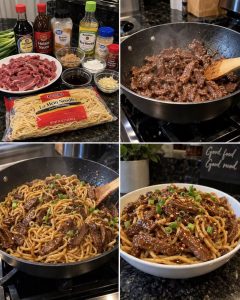
Mongolian Beef & Noodles – Easy, Sweet and Savory 30-Minute Dinner
If you’re craving a delicious takeout-style dinner without leaving home, this Mongolian Beef & Noodles recipe is about to become a family favorite! Tender slices of beef, chewy lo mein noodles, and a rich, glossy sauce come together in one irresistible dish that’s sweet, savory, garlicky, and packed with flavor.
Inspired by the popular flavors of Mongolian beef, this easy homemade version combines soy sauce, hoisin sauce, brown sugar, rice vinegar, and fresh garlic to create a perfectly balanced sauce that clings to every bite. The beef cooks quickly in a hot skillet, and once the noodles are tossed into the sauce, dinner is practically ready.
Best of all, you don’t need fancy ingredients or complicated techniques. This recipe is ideal for busy weeknights, cozy family dinners, or whenever you’re craving your favorite Asian-inspired takeout at home.
Serve it straight from the skillet, garnish with sliced green onions, and add a pinch of red pepper flakes if you enjoy a little heat. Every forkful delivers tender beef, flavorful noodles, and that sweet-and-savory sauce everyone loves!
Why You’ll Love This Mongolian Beef & Noodles Recipe
- Quick and easy: A satisfying dinner that comes together in about 30 minutes.
- Takeout-inspired flavor: Sweet brown sugar, savory soy sauce, fragrant garlic, and rich hoisin create a delicious homemade sauce.
- Perfectly tender beef: A light coating of cornstarch helps the beef brown beautifully and gives the sauce a silky finish.
- Hearty and satisfying: Beef and noodles make a complete, comforting main dish.
- Easy to customize: Add vegetables, adjust the sweetness, or increase the spice to suit your taste.
- Family-friendly: The sauce is flavorful without being too spicy, making it easy to adapt for different preferences.
- Great for leftovers: Store and reheat portions for a convenient lunch or dinner the next day.
Recipe at a Glance
- Prep Time: 10 minutes
- Cook Time: 15–20 minutes
- Total Time: Approximately 25–30 minutes
- Servings: 4
- Cuisine: Asian-inspired
- Course: Main Course, Dinner
- Cooking Method: Stovetop
- Difficulty: Easy
Ingredients for Mongolian Beef & Noodles
For the Beef and Noodles
- 1 pound thinly sliced beef: Flank steak is an excellent choice, but sirloin or another tender cut works well too.
- 8 ounces lo mein noodles: These provide the classic chewy texture. Fresh or dried lo mein noodles can be used according to their package directions.
- 1 tablespoon oil: Use a neutral, high-heat cooking oil, such as canola, vegetable, or avocado oil.
- 1 tablespoon cornstarch: Tossed with the beef, it helps create a light coating that encourages browning and helps the sauce cling to the meat.
- 2 green onions, sliced: Add freshness, color, and a mild onion flavor at the end.
For the Mongolian Sauce
- ¼ cup soy sauce: Provides the salty, savory foundation of the sauce. Use low-sodium soy sauce if preferred.
- 2 tablespoons hoisin sauce: Adds depth, sweetness, and a rich, slightly tangy flavor.
- 2 tablespoons brown sugar: Creates the signature sweet-savory balance and helps the sauce become glossy.
- 1 tablespoon rice vinegar: Adds brightness to balance the sweetness.
- 2 cloves garlic, minced: Fresh garlic gives the sauce its irresistible aroma.
- Red pepper flakes, optional: Add a pinch for gentle heat or more if you prefer a spicy finish.
Ingredient Substitutions and Notes
Best beef cuts: Flank steak is a classic option because it cooks quickly when sliced thinly across the grain. Sirloin and skirt steak can also work well.
Noodle alternatives: If lo mein noodles aren’t available, try spaghetti, linguine, ramen noodles, or another wheat noodle. Cook according to the package directions and drain well before adding them to the skillet.
Soy sauce alternative: Reduced-sodium soy sauce helps control the saltiness. For a gluten-free version, use certified gluten-free tamari and make sure the hoisin sauce and noodles are also gluten-free.
Brown sugar: Light or dark brown sugar works. Dark brown sugar creates a deeper, slightly more caramel-like flavor.
Hoisin sauce: This ingredient contributes much of the sauce’s characteristic flavor. If you substitute it, expect the finished dish to taste a little different.
Vegetables: Broccoli florets, thinly sliced bell peppers, carrots, mushrooms, or snap peas are excellent additions.
How to Make Mongolian Beef & Noodles
Follow these simple steps for tender beef, perfectly coated noodles, and a flavorful sauce.
Step 1: Prepare the Beef
Pat the beef dry with paper towels if it is particularly moist. Slice it thinly across the grain, then place it in a bowl and sprinkle with the cornstarch.
Toss until each piece has a light, even coating. Avoid using too much cornstarch, as a thick coating can make the beef gummy rather than lightly crisp.
Helpful tip: If the beef is difficult to slice, place it in the freezer for about 15–20 minutes to firm it up slightly before cutting.
Step 2: Cook the Noodles
Bring a pot of water to a boil and cook the lo mein noodles according to the package instructions. Aim for tender noodles that still have a little bite, since they will be tossed in the hot sauce later.
Drain thoroughly and set aside. If the noodles are likely to sit for several minutes, toss them with a tiny amount of oil to help prevent sticking.
Important: Avoid overcooking the noodles. They can become soft and break apart when combined with the beef and sauce.
Step 3: Brown the Beef
Heat the oil in a wok or large skillet over medium-high to high heat. Once the oil is hot, add the beef in a single layer.
Cook for approximately 3–4 minutes, turning as needed, until the pieces are browned and cooked through. Work in batches if necessary; overcrowding the pan can cause the beef to steam instead of brown.
Transfer the cooked beef to a clean plate if you need to cook it in batches.
Pro tip: Let the beef sit undisturbed briefly before turning it. This helps develop a flavorful browned surface.
Step 4: Mix the Mongolian Sauce
In a small bowl, whisk together the soy sauce, hoisin sauce, brown sugar, rice vinegar, and minced garlic until the sugar begins to dissolve.
Taste the mixture before adding it to the skillet. If you prefer a less sweet sauce, reduce the brown sugar slightly. For extra tang, add a small splash of rice vinegar.
Step 5: Simmer the Beef in the Sauce
Return all the beef to the skillet, if you removed it. Pour in the sauce and stir to coat the meat.
Let everything simmer for 1–2 minutes, stirring frequently, until the sauce becomes glossy and clings to the beef. Keep the heat controlled so the sugar doesn’t scorch.
If the sauce becomes too thick, add a tablespoon or two of water to loosen it. If it seems too thin, allow it to simmer briefly before adding the noodles.
Step 6: Add the Lo Mein Noodles
Add the cooked noodles to the skillet. Using tongs or two large spoons, gently toss the noodles with the beef and sauce until everything is evenly coated.
Cook for another 1–2 minutes, just until the noodles are heated through and have absorbed some of the delicious sauce.
If the noodles seem dry, add a small splash of water and toss again.
Step 7: Garnish and Serve
Remove the skillet from the heat. Sprinkle the sliced green onions over the top and add red pepper flakes if desired.
Serve immediately while the beef is tender, the noodles are hot, and the sauce is glossy.
For a restaurant-style presentation, finish with extra green onions and a sprinkle of sesame seeds, if available.
Expert Tips for the Best Mongolian Beef & Noodles
- Slice the beef thinly and across the grain for a more tender bite.
- Pat the meat dry before coating it with cornstarch.
- Preheat the skillet before adding the beef.
- Cook in batches rather than crowding the pan.
- Prepare the sauce before cooking so you can move quickly once the beef is browned.
- Drain the noodles well to prevent the sauce from becoming watery.
- Add the noodles only after the sauce has developed its glossy consistency.
- Toss gently to keep the noodles from breaking.
- Adjust the sauce before serving instead of adding extra soy sauce automatically, which can make it too salty.
- Finish with green onions just before serving for the freshest flavor.
Variations to Try
1. Spicy Mongolian Beef & Noodles
Add red pepper flakes, a little chili-garlic sauce, or a small amount of sriracha to the sauce. Start with a little and increase to taste.
2. Mongolian Beef and Broccoli Noodles
Add small broccoli florets. Steam them briefly or stir-fry them until crisp-tender before combining them with the beef and noodles.
3. Vegetable-Packed Mongolian Noodles
Include sliced bell peppers, carrots, mushrooms, or snap peas. Cook the vegetables until tender-crisp so they retain some texture.
4. Extra-Garlicky Mongolian Beef
Increase the garlic to 4 cloves for a stronger garlic flavor. Add the extra garlic carefully so it doesn’t burn in the hot pan.
5. Sesame Mongolian Beef Noodles
Finish with toasted sesame seeds and a small drizzle of toasted sesame oil. Add sesame oil at the end rather than using it as the primary high-heat cooking oil.
6. Sweeter Mongolian Beef
If you prefer a sweeter takeout-style sauce, add a little more brown sugar, tasting as you go. Remember that hoisin sauce already contributes sweetness.
7. Less-Sweet Mongolian Beef
Reduce the brown sugar to 1 tablespoon and taste the sauce before adding the noodles. The finished dish will be more savory and less caramel-like.
8. Gluten-Free Mongolian Beef & Noodles
Use gluten-free tamari instead of regular soy sauce, gluten-free hoisin sauce, and noodles labeled gluten-free. Check every sauce label to confirm.
9. Chicken Mongolian Noodles
Replace the beef with thinly sliced boneless chicken breast or thighs. Cook the chicken thoroughly to an internal temperature of 165°F (74°C).
10. Extra-Saucy Mongolian Noodles
If you love plenty of sauce, increase the sauce ingredients proportionally and add a small splash of water or beef broth. Simmer until it lightly coats the noodles.
What to Serve with Mongolian Beef & Noodles
This dish is satisfying on its own, but a simple side can make dinner feel even more special.
- Steamed broccoli: Adds freshness and balances the rich sauce.
- Stir-fried vegetables: Bell peppers, carrots, snap peas, and mushrooms pair beautifully with the beef.
- Cucumber salad: A cool, crisp side offers a refreshing contrast.
- Steamed edamame: A simple, protein-rich addition.
- Asian-inspired slaw: Crunchy cabbage and carrots add texture.
- Spring rolls: A fun side for a homemade takeout-style dinner.
- Steamed rice: Useful if you have extra sauce, although the noodles already make this meal hearty.
- A light soup: A simple vegetable or clear broth soup works well as a starter.
For an easy weeknight meal, serve the noodles in bowls with steamed broccoli on the side. For a casual dinner with friends, add a platter of vegetables and spring rolls.
Make-Ahead Instructions
You can prepare some components in advance to make dinner even faster.
- Slice the beef: Refrigerate the sliced beef in a covered container and use it within 1–2 days, or freeze it for longer storage.
- Mix the sauce: Combine the sauce ingredients in a sealed container and refrigerate for up to 3 days.
- Prepare the vegetables: Wash and slice any additional vegetables ahead of time.
- Cook the noodles: For the best texture, cook them shortly before serving. If cooking ahead, drain them well, cool promptly, and refrigerate in a covered container.
When you’re ready to eat, cook the beef, add the prepared sauce, and toss everything with the noodles.
Storage Instructions
Allow leftovers to cool slightly, then transfer them to a shallow, airtight container and refrigerate promptly. Refrigerate within 2 hours of cooking, or within 1 hour if the surrounding temperature is above 90°F (32°C).
Store Mongolian Beef & Noodles in the refrigerator for 3–4 days.
For the best quality, keep the noodles and beef together in a tightly sealed container so the noodles don’t dry out.
Can You Freeze Mongolian Beef & Noodles?
Yes, although the noodles may become softer after thawing. For the best texture, freeze the cooked beef and sauce separately from the noodles when possible.
- Cool the food promptly.
- Transfer it to freezer-safe containers.
- Label with the date.
- Freeze for about 2–3 months for best quality.
- Thaw overnight in the refrigerator before reheating.
Discard leftovers that have been left at room temperature too long or show signs of spoilage.
How to Reheat Mongolian Beef & Noodles
Reheating on the Stovetop
This is the best method for restoring the noodles’ texture.
- Place the leftovers in a skillet over medium-low heat.
- Add 1–2 tablespoons of water or broth.
- Toss gently while heating.
- Continue until steaming hot throughout.
Add more liquid in small amounts if the sauce has thickened too much.
Reheating in the Microwave
- Place a portion in a microwave-safe bowl.
- Add a teaspoon or two of water.
- Cover loosely with a microwave-safe lid.
- Heat in short intervals, stirring between intervals, until steaming hot throughout.
Reheat leftovers to 165°F (74°C). Avoid repeatedly cooling and reheating the same portion.
Frequently Asked Questions
1. What is Mongolian Beef & Noodles?
Mongolian Beef & Noodles is an Asian-inspired dish made with thinly sliced beef, noodles, and a sweet-savory sauce featuring soy sauce, hoisin, brown sugar, and garlic.
2. Is this recipe spicy?
Not by default. Red pepper flakes are optional, so you can keep the dish mild or add as much heat as you like.
3. What cut of beef works best?
Flank steak is a great choice because it can be sliced thinly and cooks quickly. Sirloin and skirt steak are also suitable options.
4. How do I keep the beef tender?
Slice the beef thinly across the grain, avoid overcooking it, and cook in batches to help it brown instead of steam.
5. Can I use a different type of noodle?
Yes. Spaghetti, linguine, ramen noodles, and other wheat noodles can work if lo mein noodles aren’t available.
6. Do I have to use hoisin sauce?
Hoisin sauce provides a distinctive sweet and savory flavor. You can experiment with a substitute, but the taste will differ from the original recipe.
7. Why is cornstarch used on the beef?
Cornstarch helps create a light coating on the beef and helps the sauce cling to the cooked meat. It also encourages browning when used in a thin layer.
8. Can I use frozen beef?
Yes. Thaw it safely in the refrigerator before slicing and cooking. Slightly firm, partially chilled beef is often easier to slice thinly.
9. Can I add vegetables?
Absolutely. Broccoli, carrots, bell peppers, snap peas, and mushrooms all work well. Cook them until crisp-tender before tossing everything together.
10. How can I make the sauce less sweet?
Reduce the brown sugar to 1 tablespoon and taste the sauce. You can add a little more rice vinegar for balance.
11. How can I make the sauce thicker?
Let it simmer briefly to reduce. If it still needs thickening, mix a small amount of cornstarch with cold water and stir it into the simmering sauce gradually.
12. What if my sauce becomes too thick?
Add a tablespoon of water or broth at a time, stirring until the sauce reaches your preferred consistency.
13. Can I make this recipe gluten-free?
Yes, with suitable substitutions. Use gluten-free tamari, certified gluten-free hoisin sauce, and gluten-free noodles, checking all product labels.
14. Can I make it ahead of time?
Yes. Prepare the sauce and slice the beef in advance. For the best noodle texture, cook and combine everything shortly before serving.
15. How long do leftovers last?
Refrigerated leftovers generally keep for 3–4 days in an airtight container when stored promptly and handled safely.
16. Can I freeze this dish?
Yes. It can be frozen for about 2–3 months for best quality. Freezing the beef and sauce separately from the noodles may help preserve texture.
17. What’s the best way to reheat leftovers?
Reheat them in a skillet over medium-low heat with a splash of water or broth. Stir gently until steaming hot throughout.
18. Can I use chicken instead of beef?
Yes. Thinly sliced chicken breast or thighs work well with the sauce. Cook chicken to an internal temperature of 165°F (74°C).
19. What can I serve with Mongolian Beef & Noodles?
Steamed broccoli, stir-fried vegetables, cucumber salad, edamame, spring rolls, or a light soup are all delicious choices.
20. How can I make this recipe taste more like restaurant takeout?
Use a hot skillet, brown the beef in batches, avoid overcooking the noodles, and let the sauce become glossy before tossing everything together. Finish with fresh green onions and toasted sesame seeds if desired.
20 Tips and Secrets for Perfect Mongolian Beef & Noodles
- Slice against the grain: This shortens the muscle fibers and helps the beef feel more tender.
- Keep the slices thin: Thin pieces cook quickly and mix easily with the noodles.
- Chill the beef briefly: A short time in the freezer can make slicing easier.
- Dry the beef first: Excess moisture can interfere with browning.
- Use a hot skillet: A properly heated pan encourages a flavorful sear.
- Don’t crowd the pan: Cook the beef in batches if necessary.
- Measure the sauce ingredients ahead: This makes the cooking process faster and smoother.
- Dissolve the sugar: Stir the sauce well so the brown sugar distributes evenly.
- Watch the garlic: Garlic can burn quickly, so avoid letting it scorch in the pan.
- Cook noodles just until tender: Slightly firm noodles hold up better during tossing.
- Drain thoroughly: Excess cooking water can dilute the sauce.
- Use tongs for tossing: They help coat the noodles evenly without crushing them.
- Add liquid gradually: A small splash of water can loosen a thick sauce without making the dish watery.
- Taste before serving: Adjust sweetness, acidity, or spice while the dish is still in the skillet.
- Use low-sodium soy sauce if needed: This gives you more control over saltiness.
- Add vegetables strategically: Cook firm vegetables first and delicate vegetables later.
- Save green onions for the end: They retain their color and fresh flavor.
- Finish with sesame seeds: They add a pleasant crunch and attractive presentation.
- Reheat with moisture: A little water or broth helps prevent leftover noodles from drying out.
- Serve immediately: The sauce and noodles have their best texture when freshly tossed and hot.
When to Serve Mongolian Beef & Noodles
This versatile dinner works for many occasions:
- Busy weeknights: A satisfying alternative to ordering takeout.
- Family dinners: Easy to adapt for mild or spicy preferences.
- Casual date nights: Serve in bowls with a vegetable side for a simple homemade dinner.
- Meal prep: Portion leftovers into containers for convenient lunches.
- Weekend comfort food: Enjoy a hearty noodle dish without complicated preparation.
- Homemade takeout nights: Pair with spring rolls, edamame, or stir-fried vegetables for a fun spread.
Final Thoughts
This easy Mongolian Beef & Noodles recipe brings together everything you want in a comforting takeout-inspired dinner: tender beef, chewy noodles, fresh green onions, and a glossy sauce that’s sweet, savory, and full of garlic flavor.
With simple ingredients and a quick stovetop method, it’s an excellent choice for busy evenings when you want something satisfying without spending hours in the kitchen. You can keep it classic, add colorful vegetables, or turn up the heat with red pepper flakes.
Make it once, save the recipe, and you’ll have a dependable homemade favorite ready whenever those takeout cravings strike.
Give it a try, serve it hot, and enjoy every delicious bite!