
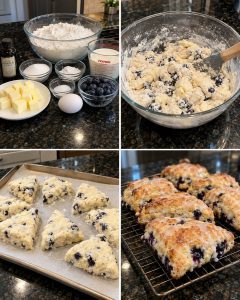
Blueberry Scones: Buttery, Tender, and Bursting with Fresh Blueberries
These homemade blueberry scones are everything a perfect breakfast pastry should be: golden on the outside, soft and tender on the inside, and filled with juicy blueberries in every bite. Made with simple pantry ingredients, cold butter, rich heavy cream, and a touch of vanilla, these classic blueberry scones come together easily and bake into beautiful wedges with crisp edges and a delicate, crumbly texture.
Whether you’re planning a cozy weekend breakfast, an afternoon tea party, or a special brunch with family and friends, these easy blueberry scones are guaranteed to impress. Enjoy them warm from the oven, or take them to the next level with a sweet powdered-sugar glaze drizzled over the top.
The best part? You don’t need any special equipment or complicated techniques. With a few simple tips, you’ll have bakery-style blueberry scones right in your own kitchen!
Why You’ll Love These Blueberry Scones
- Easy to make: No mixer or complicated pastry techniques required.
- Buttery and tender: Cold butter creates a delicate, flaky texture.
- Bursting with blueberries: Every wedge contains sweet, juicy berries.
- Perfectly balanced sweetness: Just enough sugar to complement the fruit without making the scones overly sweet.
- Wonderful for breakfast or brunch: Pair them with coffee, tea, or a glass of milk.
- Customizable: Add lemon zest, almond extract, or a simple vanilla glaze to make them your own.
- Freezer-friendly: Prepare a batch ahead of time and enjoy homemade scones whenever a craving strikes.
Recipe Overview
- Prep Time: 15 minutes
- Cook Time: 18–22 minutes
- Total Time: 33–37 minutes
- Servings: 8 scones
- Course: Breakfast, Brunch, Dessert
- Cuisine: British-inspired, American bakery-style
- Method: Baking
- Difficulty: Easy
Ingredients for Blueberry Scones
1. All-purpose flour — 2 cups
Flour gives the scones their structure while keeping the crumb tender. Measure it by spooning it into your measuring cup and leveling the top instead of packing it down.
2. Granulated sugar — ¼ cup
Sugar adds gentle sweetness and helps the scones develop a beautiful golden crust. If you prefer a less-sweet pastry, you can reduce it slightly.
3. Baking powder — 2 teaspoons
Baking powder helps the scones rise in the oven, creating a light, fluffy interior rather than a dense texture.
4. Salt — ½ teaspoon
Salt balances the sweetness and brings out the rich flavor of the butter and blueberries.
5. Cold butter — ½ cup, cubed
Cold butter is essential for tender, flaky scones. As the butter melts in the oven, it helps create little pockets of richness throughout the dough. Unsalted butter is ideal, but salted butter can also work if you slightly reduce the added salt.
6. Blueberries — ½ cup
Fresh blueberries are wonderful in this recipe, adding juicy sweetness and a little tartness. Frozen blueberries also work beautifully when used straight from the freezer.
7. Heavy cream — ¾ cup
Heavy cream adds moisture, richness, and tenderness. It helps bring the dough together without making the scones dry.
8. Egg — 1 large
The egg provides structure, richness, and a soft interior. It also helps the scones develop a lovely golden color.
9. Vanilla extract — 1 teaspoon
Vanilla gives the scones a warm, bakery-style aroma that pairs perfectly with blueberries.
Optional powdered-sugar glaze
For a pretty finishing touch, combine:
- ½ cup powdered sugar
- 1–2 tablespoons milk or heavy cream
- ¼ teaspoon vanilla extract, optional
Whisk until smooth, adding the liquid gradually until the glaze reaches a drizzle-friendly consistency.
Kitchen Equipment You’ll Need
- Large mixing bowl
- Small bowl or measuring jug
- Pastry cutter, fork, or fingertips for cutting in the butter
- Whisk
- Silicone spatula or wooden spoon
- Sharp knife or bench scraper
- Baking sheet
- Parchment paper
- Wire cooling rack
How to Make Blueberry Scones Step by Step
Step 1: Preheat the oven
Preheat your oven to 400°F (200°C). Line a baking sheet with parchment paper to prevent sticking and make cleanup easier.
If your kitchen is warm, consider chilling the cubed butter and even the mixing bowl before starting. Keeping the ingredients cold helps produce a better texture.
Step 2: Mix the dry ingredients
In a large bowl, whisk together the flour, sugar, baking powder, and salt until evenly combined.
Breaking up any lumps now helps distribute the baking powder throughout the flour, allowing the scones to rise evenly.
Step 3: Cut in the cold butter
Add the cold, cubed butter to the flour mixture.
Use a pastry cutter, fork, or your fingertips to work the butter into the dry ingredients until the mixture resembles coarse crumbs, with some small, pea-sized pieces of butter remaining.
Don’t worry if the mixture looks a little uneven. Those little pieces of butter help create a tender, flaky texture.
Important tip: Avoid melting the butter or mixing until the mixture becomes smooth. The goal is a crumbly mixture with visible bits of cold butter.
Step 4: Gently fold in the blueberries
Add the blueberries to the flour and butter mixture. Fold them in gently with a spatula until distributed.
If using fresh berries, make sure they are washed and thoroughly dried before adding them. Excess moisture can make the dough sticky.
If using frozen blueberries, don’t thaw them first. Add them straight from the freezer and work quickly to minimize color streaking.
Step 5: Whisk the wet ingredients
In a separate bowl or measuring jug, whisk together the heavy cream, egg, and vanilla extract until smooth.
Pour the wet mixture into the dry ingredients.
Step 6: Bring the dough together
Stir gently with a spatula or wooden spoon until the dough just comes together.
The dough should be soft and slightly sticky, but firm enough to shape. If you see a few dry crumbs, gently press them into the dough with your hands.
Avoid overmixing. Too much mixing develops the gluten in the flour, which can make the finished scones tough instead of tender.
If the dough feels unusually wet, let it rest in the refrigerator for 10–15 minutes before shaping rather than adding large amounts of extra flour.
Step 7: Shape the dough
Transfer the dough to a lightly floured work surface.
Gently pat it into a thick circle approximately 7–8 inches across and around 1 inch thick. Try not to knead it like bread dough.
Using a sharp knife or bench scraper, cut the circle into 8 equal wedges, similar to cutting a pizza.
For cleaner cuts, wipe the knife between slices and press straight down instead of dragging the blade through the dough.
Step 8: Arrange the scones on the baking sheet
Place the wedges on the prepared baking sheet, leaving approximately 1–2 inches between them so they have room to rise and brown.
For a slightly taller, more defined shape, refrigerate the shaped scones for 10–15 minutes before baking. This is especially helpful if the butter has softened while shaping.
Step 9: Bake until golden
Bake at 400°F (200°C) for 18–22 minutes, or until the scones are lightly golden on top and around the edges.
The bottoms should be golden, and the centers should look set rather than wet or doughy. Baking time may vary depending on your oven and the size of the wedges.
If the tops are browning too quickly before the centers are done, loosely cover them with foil for the final few minutes.
Step 10: Cool and glaze
Remove the baking sheet from the oven and let the scones rest for about 5 minutes. Transfer them to a wire rack to cool slightly.
If you’re making the optional glaze, whisk the powdered sugar with 1 tablespoon of milk or cream and the vanilla, adding more liquid a little at a time until smooth.
Drizzle the glaze over the slightly cooled scones. Let it set for several minutes before serving.
Enjoy them warm or at room temperature with your favorite breakfast drink!
Expert Tips for Bakery-Style Blueberry Scones
- Keep the butter cold from start to finish.
- Measure the flour accurately to avoid dry, heavy scones.
- Use a gentle hand when mixing and shaping.
- Don’t overwork the dough.
- Dry fresh blueberries thoroughly after washing.
- Use frozen berries without thawing.
- Chill the shaped wedges if the dough becomes warm.
- Cut the dough with a sharp knife for neat edges.
- Avoid adding too much flour to the work surface.
- Check the scones a few minutes before the end of the baking time.
Variations and Substitutions
Lemon Blueberry Scones
Add 1–2 teaspoons of finely grated lemon zest to the sugar before mixing the dry ingredients. The fresh citrus aroma makes the blueberries taste even brighter.
Blueberry White Chocolate Scones
Fold in ¼ cup of white chocolate chips along with the blueberries for a sweeter, dessert-style pastry.
Almond Blueberry Scones
Replace the vanilla extract with ½ teaspoon of almond extract, or use half vanilla and half almond extract. Almond pairs beautifully with blueberries.
Whole-Wheat Blueberry Scones
Replace up to ½ cup of the all-purpose flour with whole-wheat flour. The texture will be slightly heartier, and you may need a small additional splash of cream if the dough seems dry.
Dairy-Free Blueberry Scones
Use a firm, plant-based butter suitable for baking and an unsweetened, full-fat plant-based cream alternative. Results will vary depending on the product, so choose one with a rich consistency.
Gluten-Free Blueberry Scones
Use a quality gluten-free all-purpose flour blend designed for baking, preferably one containing xanthan gum. The dough may need slightly different moisture levels, so follow the blend’s guidance if available.
Cinnamon Blueberry Scones
Add ¼ teaspoon of ground cinnamon to the dry ingredients for a cozy flavor that works especially well during fall and winter.
Orange Blueberry Scones
Add 1 teaspoon of orange zest to the dough for a fragrant citrus variation.
Mixed Berry Scones
Replace some or all of the blueberries with chopped strawberries, raspberries, or blackberries. Use firm, well-drained fruit and avoid adding too much moisture.
Sparkling Sugar Scones
Before baking, sprinkle the tops with coarse sugar for an attractive, lightly crunchy finish. For an egg-free wash alternative, lightly brush the tops with cream before adding the sugar.
What to Serve with Blueberry Scones
These scones are delicious on their own, but a few simple additions can turn them into a beautiful breakfast or brunch spread.
- Butter: A small pat of butter melts into a warm scone.
- Blueberry jam: Intensifies the fruity flavor.
- Lemon curd: Adds a tangy contrast to the buttery pastry.
- Strawberry or raspberry preserves: Perfect for a classic tea-time treat.
- Whipped cream: Makes the scones feel extra special.
- Greek yogurt: Offers a creamy, tangy side.
- Fresh fruit: Serve with sliced strawberries, raspberries, or melon.
- Coffee or cappuccino: A wonderful everyday pairing.
- Black tea or Earl Grey: Ideal for afternoon tea.
- Scrambled eggs and fresh fruit: Makes a more complete brunch.
Make-Ahead Instructions
You can prepare these blueberry scones ahead of time without sacrificing their delicious texture.
Prepare the dough ahead: Mix and shape the dough, then place the wedges on a parchment-lined tray. Cover and refrigerate for several hours before baking.
Freeze unbaked scones: Arrange the shaped wedges on a tray and freeze until firm. Transfer them to a freezer-safe container or bag. Bake from frozen at 400°F (200°C), allowing extra time as needed and checking that the centers are fully baked.
Prepare the glaze ahead: Mix the glaze and store it in a covered container in the refrigerator for up to several days. Stir well before using and add a little liquid if it has thickened.
For the freshest flavor and texture, bake the scones on the day you plan to serve them.
Storage Instructions
At Room Temperature
Once completely cooled, store the scones in an airtight container at room temperature for up to 2 days. Keep them away from direct sunlight and heat.
For the best texture, avoid sealing them while still warm, as trapped steam can make the crust soft.
In the Refrigerator
Refrigeration is generally unnecessary for plain scones and can dry them out. If your kitchen is very warm or the scones have a perishable filling or topping, refrigerate them in a covered container and follow appropriate food-safety guidance.
In the Freezer
Freeze completely cooled scones in a freezer-safe container or bag for up to 3 months for best quality. Separate layers with parchment paper to prevent sticking.
Freeze them without glaze when possible, then add fresh glaze after reheating.
Label the container with the date so you can keep track of freshness.
How to Reheat Blueberry Scones
Oven Method
Preheat the oven to 300°F (150°C). Place the scones on a baking sheet and warm for about 5–10 minutes, depending on their size and whether they are refrigerated or frozen.
This method is excellent for restoring a lightly crisp exterior.
Microwave Method
Place a scone on a microwave-safe plate and heat for about 10–15 seconds. Add a few seconds if needed, checking frequently to prevent it from becoming tough.
The microwave is convenient, but the crust will be softer.
From Frozen
For the best texture, thaw the scones at room temperature and warm them in a 300°F (150°C) oven for 5–10 minutes. You can also reheat directly from frozen, allowing additional time until the center is warm.
If the scones are glazed, warm them before adding fresh glaze whenever possible.
20 Frequently Asked Questions About Blueberry Scones
1. Can I use frozen blueberries?
Yes! Frozen blueberries work very well. Add them directly to the dough without thawing to reduce excess moisture and prevent the berries from breaking apart.
2. Why are my scones dry?
Dry scones often result from too much flour, overmixing, or baking for too long. Measure carefully and remove the scones from the oven as soon as they are golden and cooked through.
3. Why didn’t my scones rise?
Check that your baking powder is fresh and measure it accurately. Overworking the dough or flattening it too much can also affect the final height.
4. Can I make the dough without an electric mixer?
Absolutely. This recipe is designed to be mixed by hand using a bowl, whisk, spatula, and pastry cutter or fork.
5. Can I use milk instead of heavy cream?
You can, but the scones may be less rich and tender. If substituting, add the liquid gradually because different products contain different amounts of fat and water.
6. Should I use salted or unsalted butter?
Either works. Unsalted butter gives you more control over the seasoning. If using salted butter, consider reducing the added salt slightly.
7. Can I use self-rising flour?
You can experiment with self-rising flour, but it already contains leavening and salt. Adjusting the baking powder and salt is necessary to avoid an overly salty or excessively risen result.
8. Can I make these scones without eggs?
Yes, but the texture may change. A suitable commercial egg replacer can help, although the dough may need adjustments to achieve the right consistency.
9. How do I prevent blueberries from bleeding into the dough?
Use firm berries, fold them in gently, and avoid thawing frozen blueberries. A little purple streaking is normal and won’t affect the flavor.
10. Can I make mini blueberry scones?
Yes. Shape the dough into a circle and cut it into 12–16 smaller wedges. Start checking them earlier because smaller scones bake more quickly.
11. Can I make round scones instead of wedges?
Yes. Pat the dough into a circle and cut rounds using a floured biscuit cutter. Press straight down without twisting to help the scones rise evenly.
12. Do I need to chill the dough?
Not always, but chilling for 10–15 minutes can help if the butter has softened. Cold dough also tends to hold its shape better during baking.
13. Why are my scones tough?
Overmixing and adding too much flour are common causes. Mix only until the dough comes together and handle it as little as possible.
14. Can I add a glaze?
Definitely. A simple powdered-sugar glaze adds sweetness and gives the scones a pretty bakery-style finish. Let the scones cool slightly before drizzling.
15. How do I know when the scones are done?
Look for lightly golden tops and edges, set centers, and golden bottoms. If you’re unsure, gently separate a wedge to check that the center isn’t wet or doughy.
16. Can I prepare the scones the night before?
Yes. Shape the wedges, cover them, and refrigerate overnight. Bake them the next morning, checking for doneness and allowing a little extra time if they are very cold.
17. Can I freeze unbaked scones?
Yes. Freeze the shaped wedges until firm, then store them in a freezer-safe container. Bake from frozen, adding extra baking time as necessary.
18. How long do blueberry scones stay fresh?
For the best quality, enjoy them within 1–2 days at room temperature. They can also be frozen for up to 3 months for best quality.
19. Can I use another fruit?
Yes. Raspberries, blackberries, and small pieces of firm fruit can work well. Avoid fruit that releases excessive liquid, and fold delicate berries in carefully.
20. What is the best way to serve blueberry scones?
Serve them slightly warm with butter, jam, lemon curd, or a light glaze. Pair them with coffee or tea for a simple breakfast or afternoon treat.
20 Tips and Secrets for the Best Blueberry Scones
- Keep the butter cold. Cold butter is one of the biggest secrets to a flaky scone.
- Measure flour correctly. Spoon it into the measuring cup and level it off.
- Use fresh baking powder. Old leavening can leave your scones flat and dense.
- Don’t overmix. Stop as soon as the dough comes together.
- Dry fresh blueberries well. Extra water can make the dough sticky.
- Don’t thaw frozen berries. Add them straight from the freezer.
- Use a light touch. Pat the dough into shape rather than kneading it.
- Avoid excess flour. Too much flour on the counter can make the finished pastry dry.
- Chill warm dough. A short refrigerator rest helps firm up softened butter.
- Cut clean wedges. Use a sharp knife or bench scraper for neat edges.
- Don’t twist a biscuit cutter. If making round scones, press straight down.
- Leave space between wedges. This allows the edges to brown properly.
- Preheat the oven fully. A properly heated oven helps the scones rise.
- Use parchment paper. It prevents sticking and makes cleanup easier.
- Watch the final minutes. Scones can go from golden to overbaked quickly.
- Add citrus zest. Lemon or orange zest brightens the blueberry flavor.
- Brush the tops with cream. A light coating can encourage a more golden finish.
- Try coarse sugar. Sprinkle a little on top before baking for a subtle crunch.
- Glaze after cooling slightly. This keeps the glaze from melting completely into the warm pastry.
- **